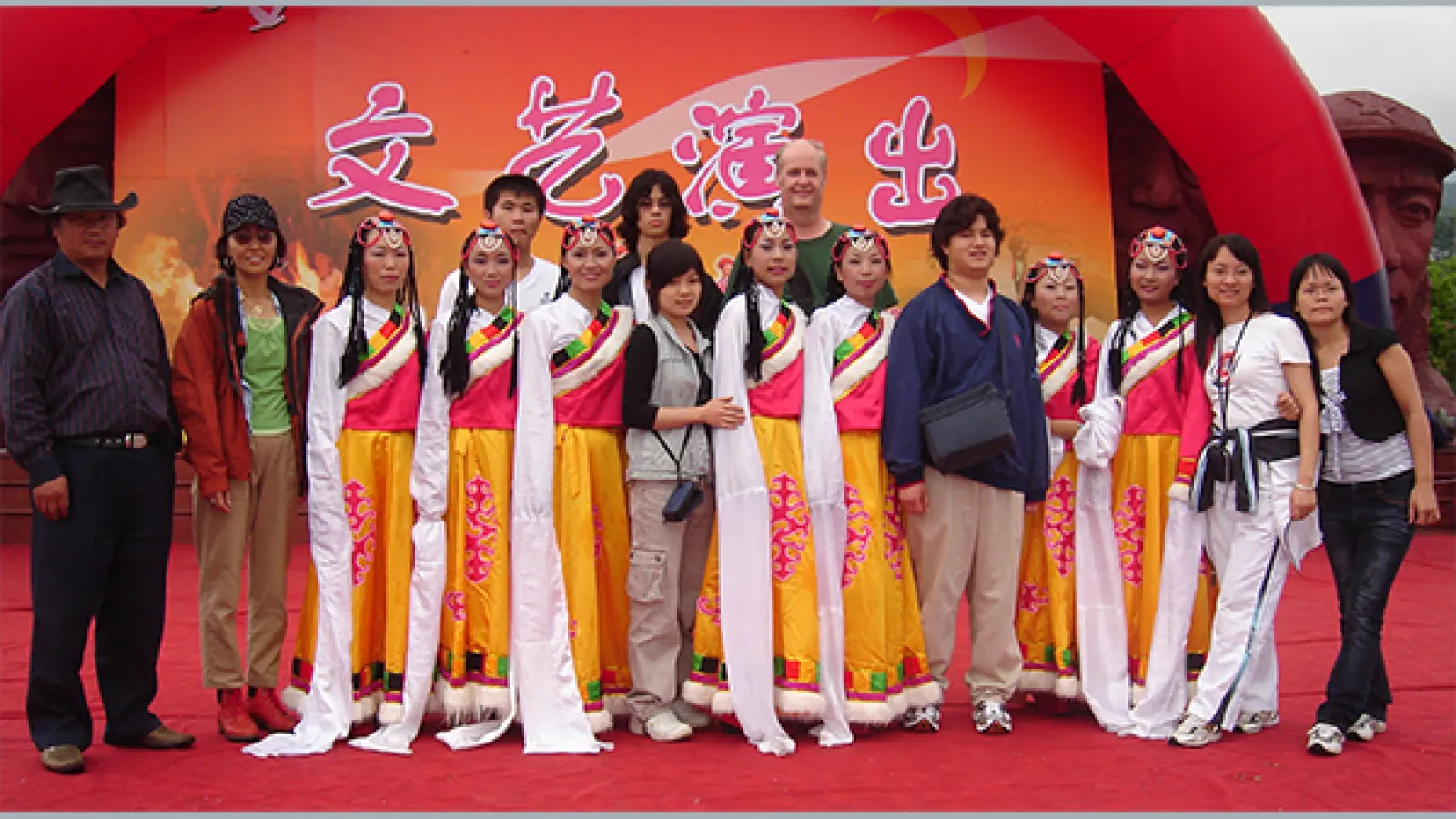
Award-winning professor advances folklore at Ohio State

The study of folklore at Ohio State – ranging from tales of ghosts and goblins to stories of cultural heritage throughout the world – dates back nearly 100 years. In recent decades, developments in the field and the establishment of the Center for Folklore Studies have led to extensive growth, with Professor Mark Bender among those at the forefront.
Bender, a former chair in the Department of East Asian Languages and Literatures, recently received the Kenneth Goldstein Award for Lifetime Academic Leadership from the American Folklore Society, recognizing outstanding achievement by a living scholar relating to folklore. His teaching and research focus primarily on traditional performance and performance-related literature in China, particularly oral and written epic poetry, an interest he has pursued since arriving at Ohio State as an undergraduate in the 1970s.
He received his bachelor’s in East Asian Languages and Literatures from Ohio State in 1980 before earning his MA and PhD in the same discipline, all as a Buckeye.
“I started studying Chinese, but I just got into the folklore,” Bender said. “It really, really appealed to me in a lot of ways, the way people make stuff with their hands or the way they tell a story to each other or people sing songs together.”
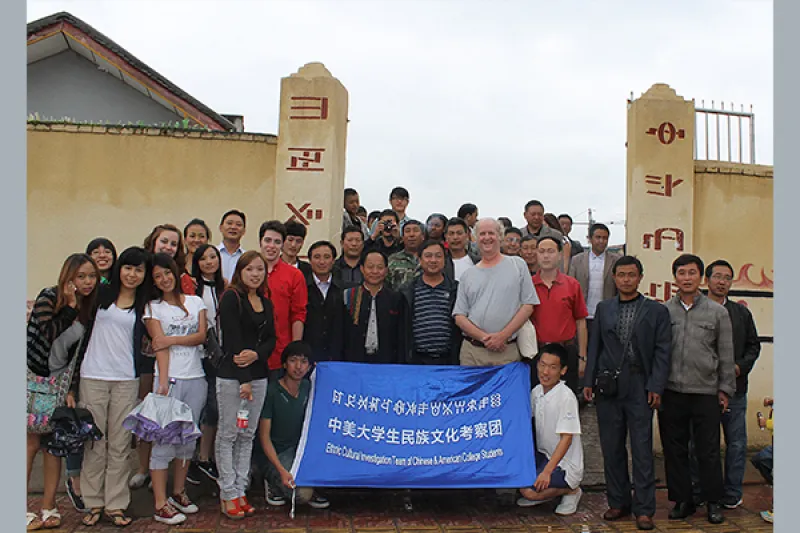
After receiving his bachelor’s degree, Bender spent time in China at the Huazhong University of Science and Technology in Wuhan and Guangxi University in Nanning, teaching American literature and translating works as he immersed himself in local culture.
“That's when I really got into using my spare time to learn more about the oral tradition, the folk singing, folk stories, material culture,” he said. “Guangxi is a multiethnic autonomous region, and I have made a lot of friends there at the university, professors and students, and was able to work on a few projects there doing some translation of some of the folklore: long, epic poems and folk tales and things like that.”
Folklore covers a broad spectrum of storytelling and expression, historically looking at rural rituals, folk songs and dances, folk tales and other facets of culture, with Bender citing the tale of Ashima, a Sani oral narrative from China, as a particular favorite. In recent years, some folklorists have expanded that definition to include more urban examples such as Mothman or Bigfoot, passed down from generations and told around a campfire or talked about on the internet.
Regardless of the source, though, Bender’s role is to help preserve these traditions – many of which are lost to time – by passing them down through his teaching. He added that there are cultural heritage projects – many in China specifically – that are working to preserve folklore across the globe.
“That's a situation that not only folklorists in China are dealing with, but in other places as well where you've got these forces of modernization and globalization going on,” he said. “But of course, you've got new fields like internet folklore. It's kind of a booming, moving dimension of it right now.”
Bender joins Professor Dorothy Noyes as Ohio State faculty to receive the Goldstein Award, with Noyes, who served as director of the Center for Folklore Studies from 2005-2014, recognized in 2021.
“Dorothy Noyes is a giant in the field of folklore studies,” Bender said. “She’s one of the absolute top people in the world. For Ohio State to have Dorothy Noyes and several other professors of international standing, it's a great thing.”
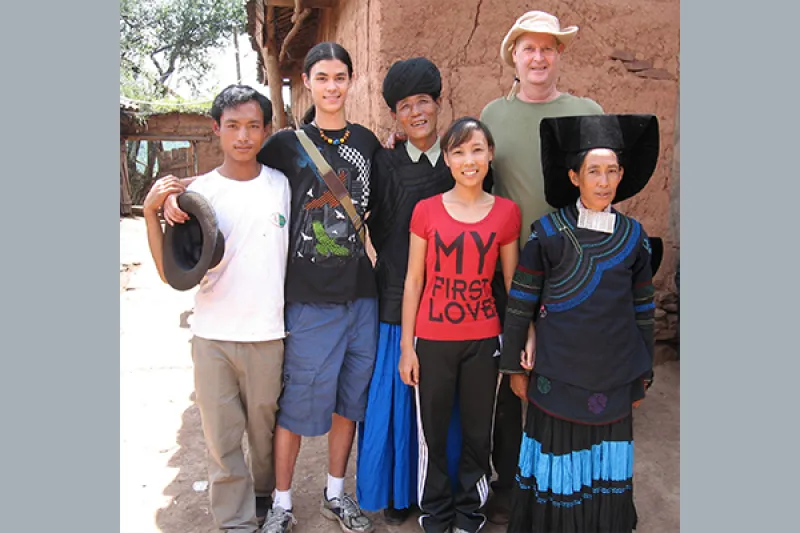
In his work with the Center for Folklore Studies and the Department of East Asian Languages and Literatures, Bender has created coursework and led study abroad trips to China where students experienced different cultural sites. In developing his passion for the field, Bender cited the influence of Professors Patrick Mullen and Amy Shuman, both of whom were founders of the Center for Folklore Studies in the 1990s.
Today, the Center for Folklore Studies has grown to include over 80 associated faculty, staff and graduate students, and extensive opportunities exist to study folklore at Ohio State. Both undergraduate and graduate programs are available to students interested in learning about folklore from some of the field’s most renowned experts.
“Ohio State has had a good track record,” Bender said. “I hope the Center for Folklore Studies stays strong moving forward, because it's definitely a plus for Ohio State and the state of Ohio.”