College of Arts and Sciences awards six Instrumentation and Infrastructure Grants
Research and creative activity are often impossible without the right equipment, and the College of Arts and Sciences continues to step up to help faculty members replace outdated instrumentation, upgrade existing infrastructure or purchase new equipment for their work.
The Arts and Sciences Research Instrumentation and Infrastructure Grant Program annually offers $25,000-500,000 grants to tenure-track faculty members across college departments. This year, six proposals from across a wide range of fields were awarded funding.
“We continue to build the infrastructure that supports our strategic goals in research and creative work,” said David Horn, dean of the College of Arts and Sciences. “These awards help accelerate the kinds of innovative projects that bring distinction to the college.”

Emilie Beaudon, an assistant professor in the School of Earth Sciences (SES), will be using the funding for a desktop scanning electron microscope coupled with energy-dispersive X-ray spectroscopy (SEM-EDS) to boost multi-disciplinary research and experiential learning in the School of Earth Sciences and the Byrd Polar and Climate Research Center (BPCRC). Beaudon leads the Ice Core geoChemistry and Climate Change (IC4) research team, which uses ice cores from polar and mid-latitude glaciers to extract records of paleo-environmental changes.
“This new generation desktop SEM-EDS combines speed of analysis, ease of use and analytical precision for increased data collection during research and more hands-on student training in the classroom,” Beaudon said. “It will broaden SES’ and the BPCRC’s analytical capabilities in mineralogy, bio- and geochemistry, glaciology, geophysics, petrology, geomechanics, microbiology, paleontology research, teaching and outreach.”

Jennifer Hellmann, assistant professor in the Department of Evolution, Ecology, and Organismal Biology, was funded to purchase an aquatic respirometer for measuring physiological response to changing environments. Her work focuses on understanding how parental exposure to novel stressors induces lifelong changes in behavioral and physiological traits of their offspring.
"By pairing oxygen consumption with live motion tracking and automated data analysis, this respirometer will allow us to link important physiological traits and swimming performance to variation in ecological or individual characteristics,” Hellmann said. “This equipment will allow many faculty to conduct cutting-edge research on physiological responses to environmental stress, as well as support valuable hands-on student training in upper-level labs. We are very grateful to the college for their investment in our department.”
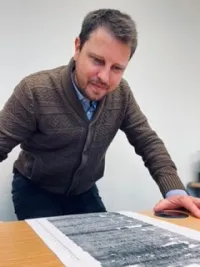
James Moore, assistant professor in the Department of Near Eastern and South Asian Languages and Cultures, will use the funding to purchase technology needed for digital documentation and preservation of ancient textual objects, such as 3D scanners and printers, photography equipment and software licenses. Moore’s research focuses on the social history of the ancient Near East and ancient Mediterranean, and his lab advances the incorporation of digital resources in the study of languages and culture.
"The IIGP Award will allow the Ohio State Digital Lab for Ancient Textual Objects to purchase advanced photographic, imaging and printing equipment, along with the hardware needed to operate the lab,” Moore said. “This equipment will be used to teach students how to preserve and study ancient objects, and it will also be used in collections and at archaeological sites worldwide to help communities digitally preserve invaluable and endangered objects of cultural heritage."

Dan Parker, an associate professor in the Department of Linguistics, received the grant to fund the purchase of a state-of-the-art electroencephalography (EEG) system, the first on campus dedicated specifically to language science research. EEG is a non-invasive technology that measures brain activity in real time, allowing researchers to study how people understand language, how language processing can break down in disorders, and how human language processing can inform and evaluate advances in artificial intelligence.
“This award will allow us to establish a state-of-the-art electroencephalography (EEG) lab for language science in the Department of Linguistics, enabling us to measure how the brain processes language in real time with millisecond precision,” Parker said. “The new system will significantly expand our research and training capacity and support interdisciplinary work at the intersection of language, neuroscience and artificial intelligence.”

Megha Sehgal, an assistant professor of behavioral neuroscience in the Department of Psychology, will upgrade her lab’s two-photon imaging capabilities to allow holographic photostimulation with a spatial light modulator (SLM). This will allow subcellular interrogation of biological compartments and allow them to investigate their specific functions in the brain and body.
“This award enables next-generation two-photon imaging and holographic stimulation, allowing real-time measurement and causal manipulation of neural circuits at single-cell resolution during behavior,” Sehgal said. “This transformative capability will open new frontiers for circuit-level neuroscience research across Ohio State.”

Matthew Sullivan, professor in the Department of Microbiology, was funded for “Transformative flow cytometry innovations to elevate ASC’s microbiome science.” His lab focuses on the co-evolution of microbes and viruses in environmental populations, as well as the impact of marine phages on microbe-mediated global biogeochemistry.
“This award enables purchase of the world’s first anaerobic small particle flow cytometer. Such an instrument could break open two barriers for Arts and Sciences researchers, including scalable access to culturing anaerobic microbes (like those in our guts) and opportunity to directly observe viruses to study their properties,” Sullivan said. “This is an R&D opportunity to work directly with the instrument designers on their beta instrument to build out these capabilities, and puts Ohio State in the pole-position for technology development in this space.”
Submissions for the Arts and Sciences Research Instrumentation and Infrastructure Grant Program are due annually at 5 p.m. EST on Oct. 1. Proposals submitted after the deadline are considered in the following IIGP cycle.