Ohio State professor works to save the world, one virus at a time

It’s rare to know early in one’s life what their career might look like, with interests and potential paths always changing as people learn more about the world around them. Matthew Sullivan, however, knew from a young age that his calling would be something greater.
“I grew up thinking, how do I do the science that we need to save the world?” he said.
Sullivan, a professor of microbiology and director for the Center of Microbiome Science, recently won the American Society for Microbiology Award for Environmental Research, which recognizes “an outstanding scientist with distinguished research achievements that have improved our understanding of microbes in the environment, including aquatic, terrestrial and atmospheric settings.” Sullivan previously received the 2023 Distinguished Scholar Award from Ohio State and has pioneered microbiome studies, with research appearing in numerous magazines and academic journals such as Science.
His environmental efforts began well before his arrival at Ohio State, as he started an ecology club in high school that encouraged the use of cloth bags as opposed to brown paper bags for school lunches. “Of course, now I look at the amount of packaging that we have and it's far, far worse, but I was eager to try to help,” he said.
That interest in environmental science grew as he received his bachelor’s from Long Island University and completed his PhD and postdoctoral program at MIT, with both universities just a few miles from the Atlantic Ocean.
“I went away to college, and there I learned that I really enjoyed the oceans. It was the first time I was living at the ocean and there were a lot of challenges the oceans face, and I was good at studying those, enjoyed the classes in that space. I've always felt a strong responsibility towards planetary stewardship, and I just think I eventually realized my role was that I could push the science.”
Sullivan’s research focuses on the interactions between microbes and viruses, specifically how viruses can infect and change microbes. “I have always been interested in the fact that viruses can infect those microbes,” he said. “That changes the microbes' role in the ecosystem, whether that's your body or out in the ocean or soil. Most of my work has been focused on pioneering work in the oceans and transferring that to soils and humans and ice,” with the latter a focus of Ohio State’s Byrd Polar and Climate Research Center.
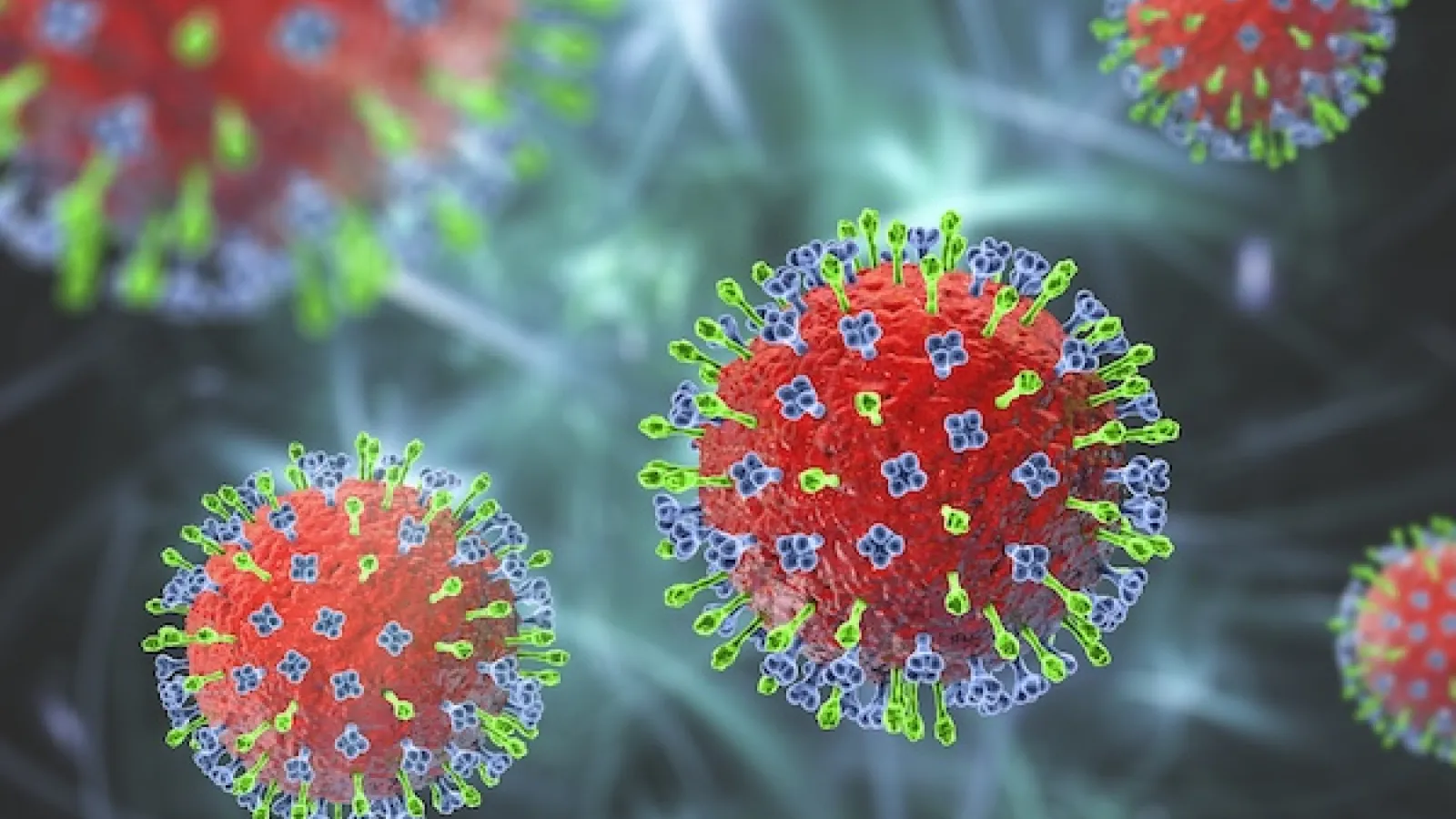
The idea of a virus often carries a negative connotation, usually associated with illness. And just as humans can get sick from viruses, affecting us from our respiratory to our digestive systems, the same is true for the environment, where most viruses infect bacteria and other organisms through the food webs that run the planet.
“For example, we’ve acidified the oceans,” Sullivan said. “Acidification stresses coral reefs, and we should establish science to counteract these stressors. For example, we could use viruses to our benefit. You could imagine, as we learn enough about microbiomes, that we could try to shift unhealthy microbiomes back to healthy ones. That can be true in our bodies, in soils and in the oceans – and viruses could be a targeted way to do this, a scalpel rather than the sledgehammer that antibiotics represent.
“Using a virus is very targeted for a particular microbe, and so if you knew enough about the complexity of the microbiome and how those organisms interact, then you could establish where to cut, where the scalpel should be used, right? That idea is called phage therapy, because viruses of bacteria are phages – just a way to treat something.”
In addition to his environmental work, Sullivan is the founding director of Ohio State’s Center of Microbiome Science. It launched in 2020 and includes faculty, research scientists and graduate students aiming to advance microbiome science at the university and beyond through four key areas of focus: increasing access to computing for researchers, bringing visibility to courses available to students, helping researchers advance their science, and developing community among microbiome researchers.
“Ohio State’s Center of Microbiome Science is very advanced and cutting-edge, likely a top three microbiome center in the world,” Sullivan said. “I think we’re really pushing the envelope with our studies into environmental microbiomes.”
With Sullivan leading the charge, the Center of Microbiome Science and its more than 400 members will continue to be at the forefront of microbial and environmental science – and will carry on identifying one virus or microbe at a time to save the world.