Professor with first-generation roots supports first-generation students

Standing in front of a 400-person lecture hall and teaching an introductory sociology course, Vinnie Roscigno will often ask a simple question: “Who here is a first-generation student?”
Many students will raise their hands, sometimes up to 20 percent of the class. Roscigno then tells them that he, too, was a first-generation student and experienced some of the same challenges they are facing. This is just one of the ways Roscigno, an Arts and Sciences Distinguished Professor in the Department of Sociology who recently celebrated 30 years at Ohio State, is sharing his experience and research to help first-generation students find a sense of community.
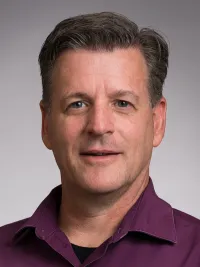
“I want them to be able to see some of themselves in a professor and know that's even a possibility,” he said.
In 2023, Roscigno received Ohio State’s Alumni Award for Distinguished Teaching, and this summer he was given the Distinguished Contributions to Teaching Award from the American Sociological Association for his national field-level teaching contributions, including his work and focus on first-generation students. First-generation students are those for whom neither parent received a four-year degree, a background Roscigno knows well through his research and personal experiences.
In recent research at Ohio State, Roscigno, along with collaborators and the support of the Center for the Study of Student Life and the Student Success Research Lab, surveyed 1,000 incoming freshmen, half of whom were first-generation students. The survey tracked these students over time, taking note of their major, graduation status and any financial and mental health concerns, among other data points.
Roscigno and other social science researchers also interviewed over 70 of these students during the first few weeks of their freshmen year and each following academic year to see how they handled any emerging difficulties, many of which occur during the pivotal first year of college. This allowed Roscigno and his collaborators to learn more about the specific challenges facing these students, such as financial barriers and social barriers, and broader issues experienced by first-generation students, including delayed graduation and higher dropout rates.
Roscigno said the survey results and interviews showed that, despite such obstacles, many first-generation students persevered and adapted across their academic journey, often by making valuable connections with peers, staff and faculty.
“When I see a first-generation freshman at Ohio State,” he said, “I think to myself, ‘Wow, you are amazing. You got here in this unbelievably competitive field. You got here despite not having as much cultural capital or financial support.’”
Roscigno was drawn to the field from his first sociology class as an undergraduate, intrigued by the idea of social mobility in the United States —opportunities for individuals as well as barriers that might prevent them from achieving their educational and occupational goals. Some of those were evident in his life, as he attended a high school where few went to college and offerings such as Advanced Placement or honors classes were limited or nonexistent. Barriers tied to race, gender, socioeconomic status and other forms of inequality can also stand between someone and their aspirations, Roscigno explained.
“It really opened my eyes to the fact that there's something bigger going on in the social world that has the effect of sorting people, despite how smart or hardworking they may be,” he said. “It blew my mind, and for the first time I was able to step outside of myself and understand broader processes within society, not just my experiences. But it did help me make sense of my experience as well.”
Once first-generation students have arrived on campus, Roscigno continues to work in and out of the classroom to help them find their community. While at one point he was hesitant to reveal himself as first-generation, he now displays that status proudly on his office door.
“I have a sticker on my door that says ‘Ohio State First Gen’ because I want students to know,” he said. “It took me a very long time before I was willing to out myself as a first-generation person because in academia, being a professor, you're also doing impression management. You can develop imposter syndrome. You want to fit in with everybody else, and you don't want to share the hard parts of where you came from.
“It took me a while before I was like, ‘You know what? We need to talk about this stuff out loud, because if we don't, then we're not helping students who feel out of place and who may be struggling about whether or not they belong.’”
There are places on campus for first-generation students to connect with others like them. The College of Arts and Sciences offers a variety of programs and resources, including Buckeye Opportunities for Leadership and Development (BOLD), and Ohio State’s Office of Undergraduate Education also offers Buckeyes First, which feature scholarship programs and a student organization that can help ease the transition to college.
And, according to Roscigno, faculty and staff should never underestimate the power of sharing their own family backgrounds and college experiences with students.
“I think it's super important for faculty and staff at an institution like Ohio State to be open about where they come from,” Roscigno said. “I can see it in the eyes of some of my students sometimes, either surprise, or they relax a little more and open up about the challenges that they're going through when they know that I went through similar challenges.”
